Are my family photos training AI without my consent?
Let’s skip the suspense.
Yes, your family photos are probably helping train AI, and no one asked your permission.
Those personal moments, from a wedding dance to a kid’s birthday, are what tech companies call “publicly available training data.” If your pictures are online and public, automated bots can collect them in seconds.
Why do they do this?
Because AI doesn’t learn reality on its own. It has to be taught.
Early versions of generative AI, like the first Midjourney models, made faces that looked too perfect - smooth, symmetrical, artificial. They were missing the details that make people look human: wrinkles from laughter, uneven light, imperfect smiles.
To fix that, developers needed something more real. So they went looking for it in your photos.
The ones with genuine expressions, messy backgrounds, and actual emotion.
Companies and researchers scrape millions of images from across the web and label them: “woman laughing,” “family hugging,” “kids at school.” That data is gold. It trains:
Facial recognition systems used in airports and by police.
Emotion detection tools that try to read expressions.
Generative AI models that create realistic human faces.
Once your photo is used, it’s permanent. Deleting the original doesn’t erase what the AI learned.
Has this already happened to regular people?
Many times. Not just to public figures. To anyone who ever uploaded a photo.
MegaFace dataset - When your Flickr albums became AI training material
The University of Washington created a massive facial recognition dataset called MegaFace using more than 3.3 million Flickr photos - family albums, weddings, daily life. Big tech companies like Google and Amazon used it to improve their systems.
Did anyone receive a warning? No.
Years later, people discovered their faces inside this dataset through investigations by The New York Times and others.
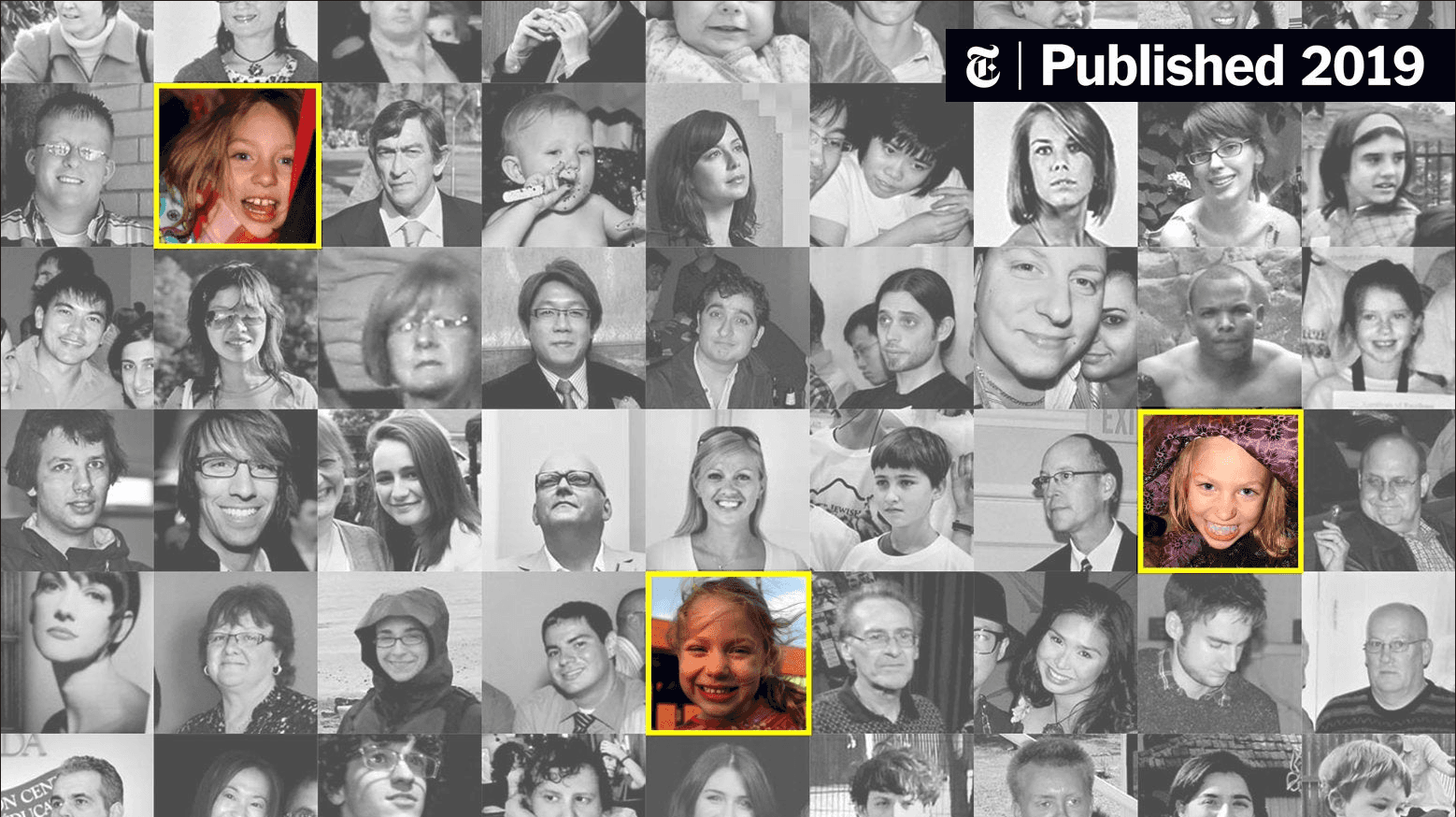
Family photos used in AI database. Source: New York Times
After the story broke, a tool called Exposing.ai let users search for their Flickr photos in AI datasets. Many found images of themselves, and their children, used without consent.
Clearview AI - The company that scraped billions of faces from social media
Clearview AI scraped billions of images from Facebook, Instagram, and other sites to build a facial recognition database for law enforcement. Their system could identify anyone from a single street photo.
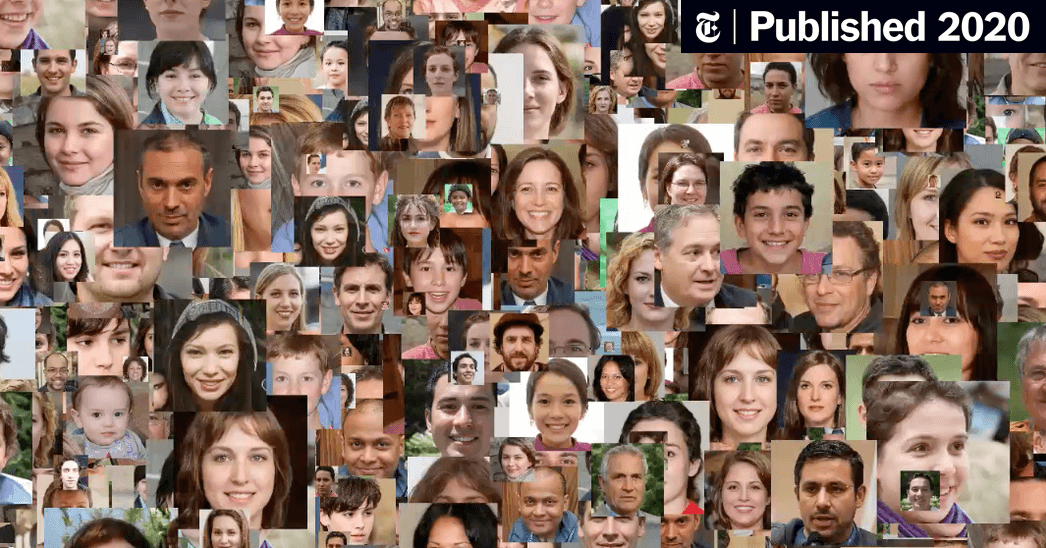
Part of Clearview AI's database. Source: New York Times
Ordinary people, including parents and families of deceased relatives, found their faces in police databases.
Clearview faced lawsuits and fines, but the images remain online. Once collected, that data doesn’t go away.
LAION-5B - Your kids’ photos inside a generative AI dataset
The LAION-5B dataset, used to train models like Stable Diffusion, contained photos of children pulled from personal blogs and videos.
Human Rights Watch found over 170 images of Brazilian children used without consent. The organization's analysis revealed that some of these images had captions or URLs that included the children's names and locations, making their identities easily traceable.
What’s the risk if AI learns from my family photos?
You lose control over your own image. That’s the core issue.
Your image can be used anywhere: Ads, research, surveillance - you won’t know or approve it.
You can’t change the story: A photo of your family hug might be used to generate fake or harmful scenes.
You might be easier to track: Facial recognition systems trained on your pictures can spot you in public.
You’re vulnerable to deepfakes: Innocent photos can fuel explicit or synthetic content, including images of minors.
Will new privacy laws protect my photos?
Partially, but not completely.
The EU AI Act limits "untargeted scraping" for creating facial recognition databases, but it doesn’t undo what’s already been done. It also allows “targeted scraping” under certain conditions.
In the US, there’s no single federal law covering this. A few state laws exist, but they don’t close the gap.
And those “opt-out” options you see? They’re buried deep in settings menus. Even if you find them, they won’t stop AI from using what it’s already learned.
How to protect family photos from AI
You can’t erase the past but you can make future scraping.
Lock down your accounts: Make old social media albums private, especially those from early Facebook or Flickr.
Turn off facial recognition features: Disable “Face Groups” in Google Photos and “Learn from this App” in Siri.
Strip metadata: Remove GPS and timestamps before uploading.
Limit public posting of children: Blur faces or share privately.
Avoid “fun” AI photo apps: Most store your uploads.
Talk to family and friends: Ask them not to post identifiable photos of your kids without consent.
Can I check if my photos are already in AI datasets?
Yes.
Use Have I Been Trained, which searches datasets like LAION-5B. Upload a photo to see if visually similar images exist.
If you find your photos, you can request removal, but that doesn’t undo what the AI already learned.
Where should I store family photos if I want them safe?
Platforms like Google Photos and iCloud are easy to use, but they don't offer true privacy. They work by holding the encryption keys for your photos on their servers. This means the company can access your photos if they need to or if they are required to by law.
The best solution is to add your own lock. Tools like MyVault place a strong privacy layer over your existing cloud storage. Your files are locked on your device before they are sent, making them accessible only to you.
With MyVault, you get:
Absolute control - You hold the key to your photos, not the cloud provider.
Encrypted access - Only you decide who sees what, and for how long.
Private search - AI tools help you find photos but never use your images to train their system.
Safe sharing - Share photos with family without exposing them to the wider internet.
You keep the convenience you want while adding the privacy you need.
How do I keep my memories mine?
Every family has moments worth remembering, and worth keeping out of an AI training set. Your digital life is a legacy. You decide where those memories live, who can access them, and when they’re shared. You don’t have to hide your life; you just need to lock it on your terms.
Laws might catch up one day, but they won't delete what has already been stolen. Your privacy depends on the tools and choices you use today. Stop training AI with your past. Start securing your future.
Related posts

Feb 3, 2026
Household systems that pay for themselves in hours
Mental load means remembering when car insurance renews, tracking which child needs new shoes, knowing the fridge filter expires next month. Every household runs on hundreds of small details that someone must hold in memory.

Sead Fadilpasic
Jan 27, 2026
The Habsburg effect: why your data just got more valuable
The European Habsburgs built an empire through strategic marriages, consolidating power by keeping bloodlines strictly within the family. Something similar is happening with AI right now.

Markos Symeonides
Jan 21, 2026
The superuser problem: why AI agents are 2026's “biggest insider threat”
The primary security issue with AI agents is their access.
Markos Symeonides